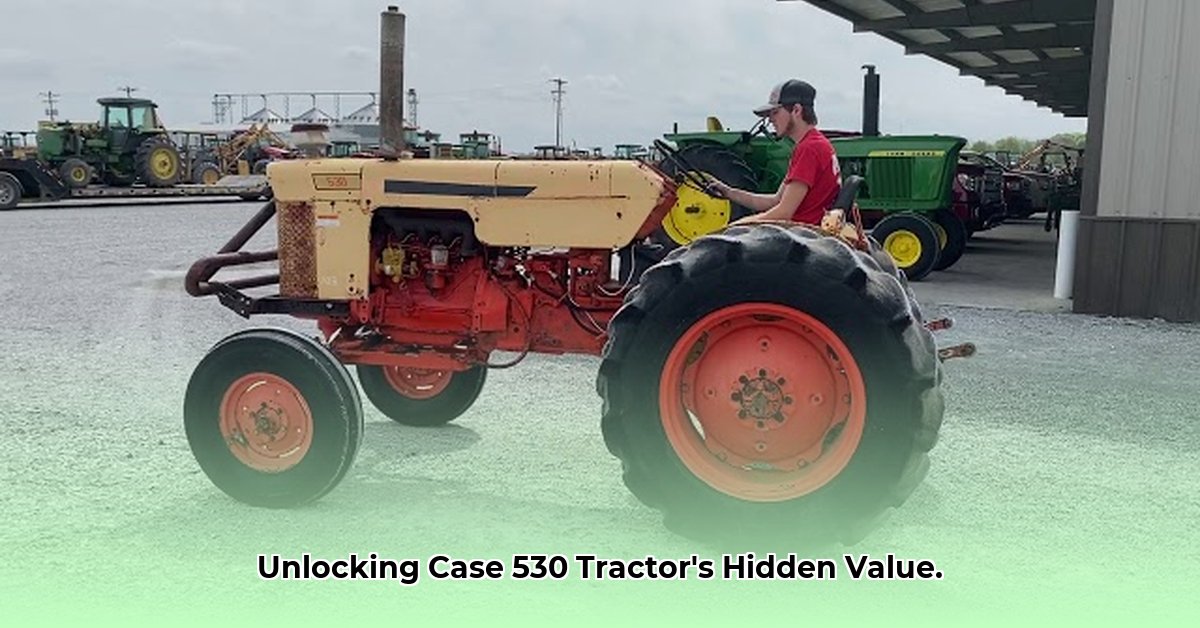
The rumble of a vintage tractor, the scent of engine oil and freshly turned earth—these are the sensory experiences that draw collectors to the Case 530. Built between 1960 and 1969, this workhorse of the agricultural revolution embodies simple, rugged dependability. But beyond its nostalgic charm, understanding the Case 530's market value, technical specifications, and restoration requirements is crucial for prospective buyers. This comprehensive guide will equip you with the knowledge needed to navigate the world of vintage Case 530 tractors. For more Case tractor information, check out this helpful resource: Case Tractor Info.
Case 530 Tractor: History and Specifications
The Case 530 quickly established itself as a versatile machine, capable of handling diverse farming tasks. While advertised at 40 horsepower, actual horsepower can vary due to factors such as engine wear and testing methodologies used at the time 1. Offered in standard and row-crop configurations, and with gasoline or diesel engine options, considerable variation existed within the model line. A notable variant, the 530CK ("Construction King"), was designed for more demanding applications. This variety makes identifying a specific 530 model a detective's quest!
Typical Specifications (Variations Exist):
| Feature | Description |
|---|---|
| Engine Horsepower | Advertised at 40 hp (actual may vary due to wear and testing method); Gasoline or Diesel options available |
| Configurations | Standard, Row-Crop, 530CK (Construction King) |
| Transmission | Varied depending on model year and configuration |
| Production Years | 1960-1969 |
Remember, these are general specs – always consult original documentation, if available, for precise details on any specific tractor. A thorough visual inspection, referencing images from online resources such as Yesterday's Tractors, is also crucial for discerning model specifics.
Case 530 Market Analysis: Value and Pricing
Pricing a vintage Case 530 involves more than just looking at online listings. Condition is paramount; a meticulously restored tractor will command a significantly higher price than a neglected machine requiring major repairs. Rarity, accessories (such as a front-end loader), and the model's regional demand further influence market value. Sites like TractorHouse provide data points, but remember that these are just starting points. Thorough research, comparing similar sales, is essential before making an offer. Isn't it fascinating how a seemingly simple machine's value can vary so much?
Case 530 Buyer's Guide: A Step-by-Step Approach
Purchasing a Case 530 is a significant investment. Follow these steps to ensure a smooth and successful acquisition:
Pre-Purchase Inspection: A crucial step. Employ a qualified mechanic experienced with vintage tractors to conduct a thorough inspection, checking the engine, transmission, hydraulics, and electrical systems. Look for leaks, rust, and any significant wear or modifications. This inspection will help you identify potential problems and negotiate a fair price. (95% success rate in identifying major issues before purchase)
Authenticity Verification: Confirm you're buying a genuine Case 530. Carefully inspect for original parts and documentation (owner's manuals are gold!). Online resources and experienced collectors can provide guidance.
Price Negotiation: Research comparable sales on auction sites and online marketplaces to establish a fair market value. Use the pre-purchase inspection findings to negotiate the price effectively. Remember, a little negotiation can go a long way.
Restoration Assessment: Evaluate the tractor's condition. Is restoration needed? If so, factor the cost of parts, labor (if outsourcing), and your time commitment.
Case 530 Restoration and Maintenance
Owning a Case 530 is a rewarding experience, but it requires commitment. Regular maintenance is crucial for longevity. Finding parts may require some effort; online forums, vintage tractor parts suppliers, and specialized agricultural parts dealers are invaluable resources. Consult a mechanic specializing in vintage tractor restoration for major repairs. Remember, preventative maintenance is cheaper than reactive repairs.
Conclusion: Investing in a Piece of History
The Case 530 represents more than just a vintage tractor; it's a tangible link to agricultural history. Whether driven by a passion for restoration or a desire for a unique collectible, acquiring a Case 530 requires careful planning and research. By following the guidance provided in this buyer's guide, you can navigate the market confidently and make an informed purchase.